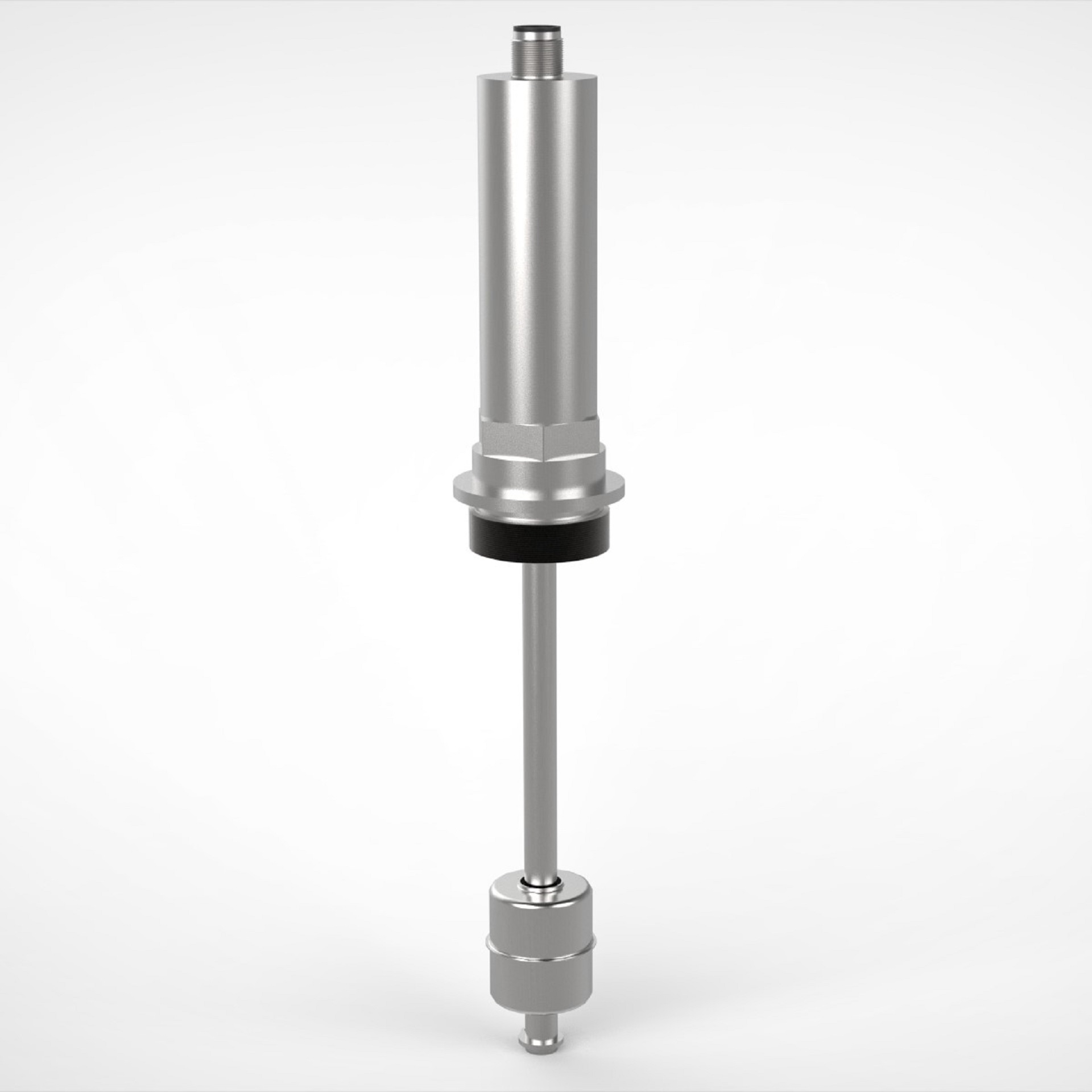
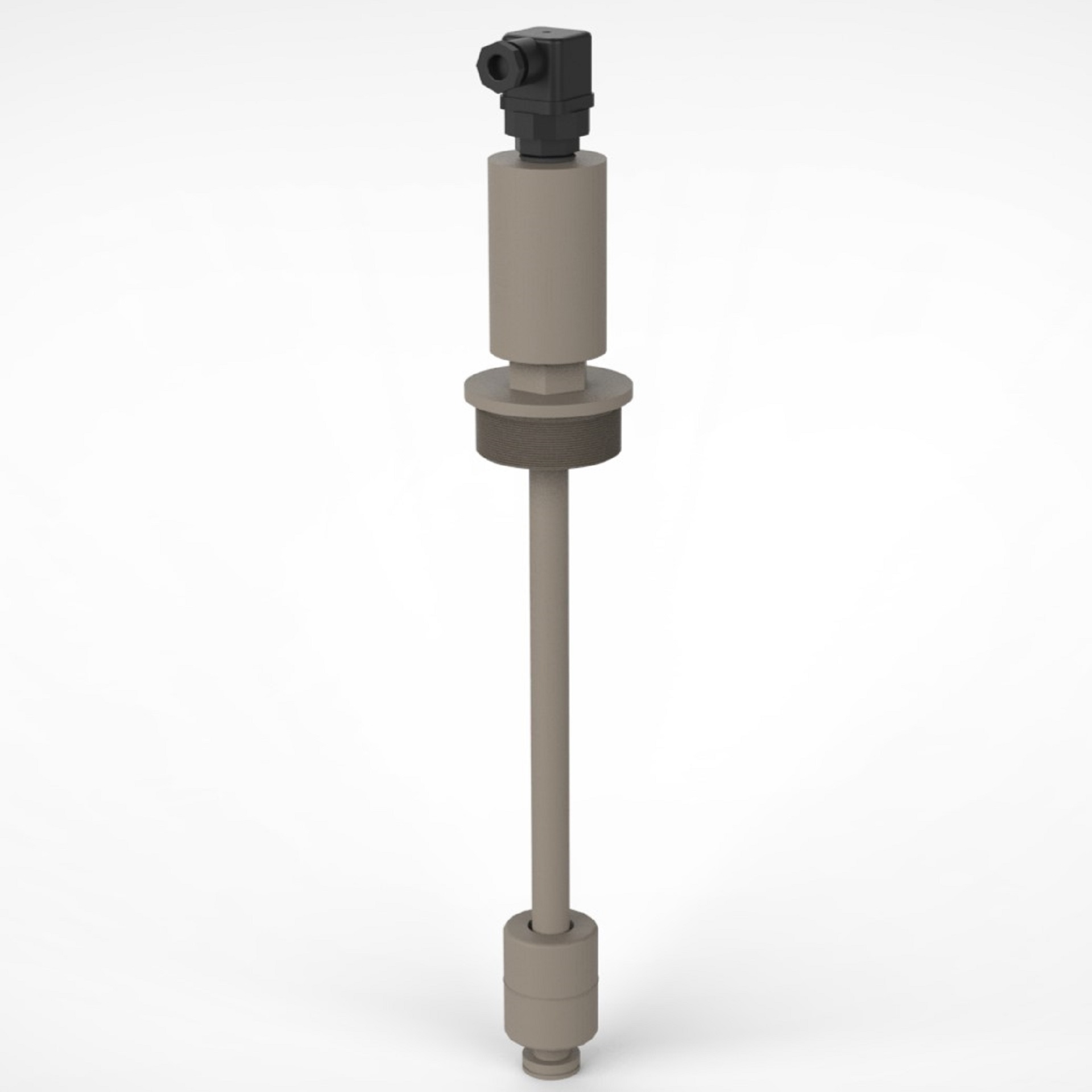
Analog Level Measurement Magnetostrictive
Our magnetostrictive level measurement systems provide highly precise level monitoring in tanks of all sizes. With advanced sensors, they deliver reliable real-time measurements and enable continuous monitoring. This allows for early detection of overfills or leaks. Automatic alarms or controls are triggered when specific levels are reached. The data can be transmitted in real-time to control systems for analysis and reporting purposes.
Precision: Magnetostrictive level sensors provide highly accurate level measurement or dosing with an accuracy of 0.1 mm.
Cost-Effective: Compared to other dosing systems such as flow measurement or scales, magnetostrictive systems are highly economical.
Maintenance-Free: Thanks to their simple, robust, and reliable design, they require no regular maintenance or calibration.
Versatile Compatibility: Magnetostrictive level sensors are compatible with a wide range of media and can be installed in containers made of various materials like plastic or metal.
Easy Installation: Installing magnetostrictive level sensors is typically straightforward and does not require complex setups.
The magnetostrictive measurement principle is based on the properties of certain materials that change under the influence of a magnetic field. One such material is the magnetostrictive wire, made from an alloy that reacts magnetically when exposed to an external magnetic field.
In level measurement using a float, the float is placed in the liquid whose level is to be measured. The float rises or falls with the liquid level and contains an integrated magnet. Surrounding the float is a tube that houses a coil. A short electrical pulse is sent through the coil to generate a magnetic field, which propagates along the tube until it reaches the magnet within the float.
When the magnetic field pulse reaches the float's magnet, it causes magnetic alignment in the wire, resulting in mechanical elongation or contraction. This deformation generates an elastic wave that travels along the wire. The coil, also functioning as a receiver, detects the returning elastic wave and converts it into an electrical signal. The time between sending the pulse and receiving the signal is measured. Since the speed of wave propagation in the wire is known, the liquid level can be calculated accurately. The magnetostrictive float thus enables precise liquid level measurement. The measured values can then be evaluated, displayed, or integrated into a control system to enable level indication or automatic control of filling processes.
Level Measurement and Feedback Loop
The magnetostrictive sensor continuously measures the level of a medium in containers or pipelines and delivers precise data. It can be integrated into a feedback loop to monitor and control the dosing process. Level information is compared with target values, and corresponding control signals are sent to the dosing system to regulate the level and maintain the desired flow rate.
Precise Dosing
Magnetostrictive level sensors provide an exact solution for the precise dosing of liquids. With their high measurement accuracy of up to 0.1 mm, they enable reliable monitoring and control of liquid volumes in real-time. They are indispensable in medical technology, chemical, pharmaceutical, and food industries, where expensive or sensitive liquids must be dosed accurately to ensure consistently high quality.
Monitoring and Control
Magnetostrictive level sensors enable precise monitoring and control of leaks in tanks and containers. With an accuracy of up to 0.1 mm, they allow for the early detection of fluid losses in real-time. This facilitates the rapid identification of leaks and immediate action to prevent damage or downtime. These sensors enhance efficiency and safety in various applications.
Magnetostrictive level sensors are used in numerous industries where precise measurements are essential. In medical technology, they measure liquid levels and dose expensive fluids. In the chemical and pharmaceutical sectors, they provide accurate measurements in demanding environments. They also ensure hygienic processes in the food and beverage industry. Additionally, they are utilized in water management and automation technology, where high precision is required.
INTRO
Our magnetostrictive level measurement systems provide highly precise level monitoring in tanks of all sizes. With advanced sensors, they deliver reliable real-time measurements and enable continuous monitoring. This allows for early detection of overfills or leaks. Automatic alarms or controls are triggered when specific levels are reached. The data can be transmitted in real-time to control systems for analysis and reporting purposes.
The magnetostrictive measurement principle is based on the properties of certain materials that change under the influence of a magnetic field. One such material is the magnetostrictive wire, made from an alloy that reacts magnetically when exposed to an external magnetic field.
In level measurement using a float, the float is placed in the liquid whose level is to be measured. The float rises or falls with the liquid level and contains an integrated magnet. Surrounding the float is a tube that houses a coil. A short electrical pulse is sent through the coil to generate a magnetic field, which propagates along the tube until it reaches the magnet within the float.
When the magnetic field pulse reaches the float's magnet, it causes magnetic alignment in the wire, resulting in mechanical elongation or contraction. This deformation generates an elastic wave that travels along the wire. The coil, also functioning as a receiver, detects the returning elastic wave and converts it into an electrical signal. The time between sending the pulse and receiving the signal is measured. Since the speed of wave propagation in the wire is known, the liquid level can be calculated accurately. The magnetostrictive float thus enables precise liquid level measurement. The measured values can then be evaluated, displayed, or integrated into a control system to enable level indication or automatic control of filling processes.
Precision: Magnetostrictive level sensors provide highly accurate level measurement or dosing with an accuracy of 0.1 mm.
Cost-Effective: Compared to other dosing systems such as flow measurement or scales, magnetostrictive systems are highly economical.
Maintenance-Free: Thanks to their simple, robust, and reliable design, they require no regular maintenance or calibration.
Versatile Compatibility: Magnetostrictive level sensors are compatible with a wide range of media and can be installed in containers made of various materials like plastic or metal.
Easy Installation: Installing magnetostrictive level sensors is typically straightforward and does not require complex setups.
APPLICATION
Level Measurement and Feedback Loop
The magnetostrictive sensor continuously measures the level of a medium in containers or pipelines and delivers precise data. It can be integrated into a feedback loop to monitor and control the dosing process. Level information is compared with target values, and corresponding control signals are sent to the dosing system to regulate the level and maintain the desired flow rate.
APPLICATION
Precise Dosing
Magnetostrictive level sensors provide an exact solution for the precise dosing of liquids. With their high measurement accuracy of up to 0.1 mm, they enable reliable monitoring and control of liquid volumes in real-time. They are indispensable in medical technology, chemical, pharmaceutical, and food industries, where expensive or sensitive liquids must be dosed accurately to ensure consistently high quality.
APPLICATION
Monitoring and Control
Magnetostrictive level sensors enable precise monitoring and control of leaks in tanks and containers. With an accuracy of up to 0.1 mm, they allow for the early detection of fluid losses in real-time. This facilitates the rapid identification of leaks and immediate action to prevent damage or downtime. These sensors enhance efficiency and safety in various applications.
AREA OF OPERATION
Magnetostrictive level sensors are used in numerous industries where precise measurements are essential. In medical technology, they measure liquid levels and dose expensive fluids. In the chemical and pharmaceutical sectors, they provide accurate measurements in demanding environments. They also ensure hygienic processes in the food and beverage industry. Additionally, they are utilized in water management and automation technology, where high precision is required.