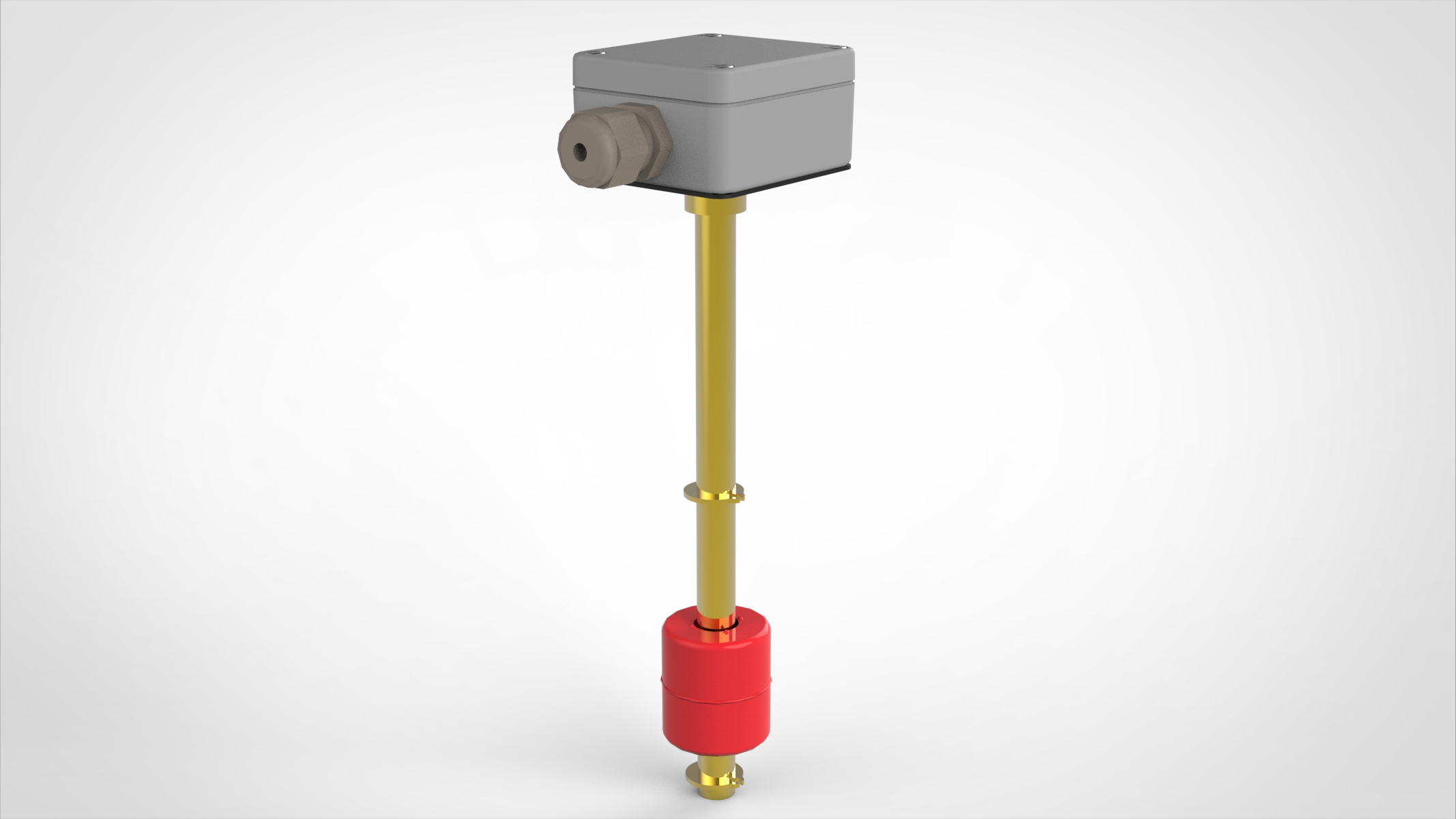
Float Switches with Electronic Temperature Switch/Controller
A float switch with a temperature sensor is a device typically used in tanks or containers to monitor the liquid level and simultaneously measure the temperature of the medium. It combines two functions in one device: a float switch for level detection and a temperature sensor for temperature measurement. The level is output in the form of a digital signal, while the measured temperature is represented as a resistance signal.
Cost Efficiency: A combined device reduces acquisition costs, as it integrates two functions in one and saves space.
Space Saving: The integration of level measurement and temperature control saves installation space, especially in confined environments.
Comprehensive Process Control: Level and temperature control in a single device allows for comprehensive process control.
Increased Process Safety: Simultaneous monitoring of level and temperature helps prevent overflow and cooling problems at an early stage.
Reduced Downtime: Early problem detection through the combined device minimizes failures and reduces downtime.
The operating principle of a float switch based on a reed contact relies on the use of a reed switch as the switching element. A float switch consists of a buoyant body, also known as a float, which floats on the liquid surface. The buoyant body is equipped with a magnet. When the liquid level changes, the buoyant body moves accordingly, either upward or downward. When a certain level is reached, the magnet approaches the reed contact. The reed contact consists of two ferromagnetic contact blades placed within a glass capsule. These blades are separated by a small air gap. When the magnet of the buoyant body reaches the reed contact, the magnetic field attracts the ferromagnetic blades, bringing them together. This closes the contact blades, completing the electrical circuit. This closed circuit can be used to send a signal, for example, to trigger an alarm or control a motor.
The electronic temperature switch/controller monitors the temperature of the liquid in the container. A temperature sensor is used to measure the current temperature of the liquid and convert it into an electrical signal. The signal is forwarded to a microcontroller or electronic control unit. The microcontroller processes the temperature signal and compares it to a predefined setpoint. Depending on whether the measured temperature meets, falls below, or exceeds the setpoint, the microcontroller controls the corresponding output components. These can be heating elements or cooling devices, which are activated or deactivated to regulate the temperature in the container.
Liquid Tanks in Production Plants
Float switches with electronic temperature switches reliably monitor the liquid level in tanks to prevent overflows or insufficient supply. The temperature switch ensures that the liquid in the tank remains within the desired temperature range, ensuring optimal operating conditions. This combination of level and temperature monitoring is ideal for the safe operation of systems in industry.
Cooling of Industrial Machines
Float switches monitor the water level in cooling tanks for machines to ensure constant cooling. The electronic temperature switch regulates the cooling performance and keeps the temperature of machines or industrial processes within defined limits. This precise control optimizes performance and prevents overheating, increasing efficiency and extending the lifespan of machines. Ideal for industrial applications.
Lubrication Systems
The float switch monitors the oil level in lubrication oil tanks and prevents damage caused by oil shortage. The electronic temperature switch regulates the oil temperature to ensure optimal lubrication. This precise monitoring ensures the efficiency of machines and extends their lifespan. Especially in industrial applications, this combination protects against overheating and failures, reducing operating costs and increasing process safety. Ideal for mechanical engineering.
Float switches with electronic temperature controllers are indispensable in industry, particularly in mechanical and plant engineering as well as hydraulics. They ensure precise level and temperature control of hydraulic fluids, optimizing machine performance and longevity. In the heating, ventilation, air conditioning, food, and pharmaceutical industries, they also ensure efficient processes and compliance with critical setpoints for smooth operations.
INTRO
A float switch with a temperature sensor is a device typically used in tanks or containers to monitor the liquid level and simultaneously measure the temperature of the medium. It combines two functions in one device: a float switch for level detection and a temperature sensor for temperature measurement. The level is output in the form of a digital signal, while the measured temperature is represented as a resistance signal.
The operating principle of a float switch based on a reed contact relies on the use of a reed switch as the switching element. A float switch consists of a buoyant body, also known as a float, which floats on the liquid surface. The buoyant body is equipped with a magnet. When the liquid level changes, the buoyant body moves accordingly, either upward or downward. When a certain level is reached, the magnet approaches the reed contact. The reed contact consists of two ferromagnetic contact blades placed within a glass capsule. These blades are separated by a small air gap. When the magnet of the buoyant body reaches the reed contact, the magnetic field attracts the ferromagnetic blades, bringing them together. This closes the contact blades, completing the electrical circuit. This closed circuit can be used to send a signal, for example, to trigger an alarm or control a motor.
The electronic temperature switch/controller monitors the temperature of the liquid in the container. A temperature sensor is used to measure the current temperature of the liquid and convert it into an electrical signal. The signal is forwarded to a microcontroller or electronic control unit. The microcontroller processes the temperature signal and compares it to a predefined setpoint. Depending on whether the measured temperature meets, falls below, or exceeds the setpoint, the microcontroller controls the corresponding output components. These can be heating elements or cooling devices, which are activated or deactivated to regulate the temperature in the container.
Cost Efficiency: A combined device reduces acquisition costs, as it integrates two functions in one and saves space.
Space Saving: The integration of level measurement and temperature control saves installation space, especially in confined environments.
Comprehensive Process Control: Level and temperature control in a single device allows for comprehensive process control.
Increased Process Safety: Simultaneous monitoring of level and temperature helps prevent overflow and cooling problems at an early stage.
Reduced Downtime: Early problem detection through the combined device minimizes failures and reduces downtime.
APPLICATION
Liquid Tanks in Production Plants
Float switches with electronic temperature switches reliably monitor the liquid level in tanks to prevent overflows or insufficient supply. The temperature switch ensures that the liquid in the tank remains within the desired temperature range, ensuring optimal operating conditions. This combination of level and temperature monitoring is ideal for the safe operation of systems in industry.
APPLICATION
Cooling of Industrial Machines
Float switches monitor the water level in cooling tanks for machines to ensure constant cooling. The electronic temperature switch regulates the cooling performance and keeps the temperature of machines or industrial processes within defined limits. This precise control optimizes performance and prevents overheating, increasing efficiency and extending the lifespan of machines. Ideal for industrial applications.
APPLICATION
Lubrication Systems
The float switch monitors the oil level in lubrication oil tanks and prevents damage caused by oil shortage. The electronic temperature switch regulates the oil temperature to ensure optimal lubrication. This precise monitoring ensures the efficiency of machines and extends their lifespan. Especially in industrial applications, this combination protects against overheating and failures, reducing operating costs and increasing process safety. Ideal for mechanical engineering.
AREA OF OPERATION
Float switches with electronic temperature controllers are indispensable in industry, particularly in mechanical and plant engineering as well as hydraulics. They ensure precise level and temperature control of hydraulic fluids, optimizing machine performance and longevity. In the heating, ventilation, air conditioning, food, and pharmaceutical industries, they also ensure efficient processes and compliance with critical setpoints for smooth operations.
no matching results